India Crafters | Artistic - Unique - Carved
Showing posts with label Carved Statues of Indian Gods and Goddesses. Show all posts

Wednesday, 7 December 2011

Indian Gods Statues

Hinduism is one of the oldest religions in history. While Hindus are believed to have 330 million gods, all devotees believe that there is only one almighty God. This concept may be hard to understand for some. Maybe the following example might be of assistance to shed some light on this idea. Think of a tree that is huge and wide spread. Now if the tree was the ultimate God, the almighty, then its many branches can be said to be the millions of gods worshipped by Hindus. And the leaves can be thought of as the different Avatars or manifestations of the various gods and goddesses. In view of the fact that there are so many gods and goddesses, and that Hindus believe in idol worship, you can come across a wide variety of Indian gods’ statues for sale at online stores.

Some of the most popularly celebrated deities in Hinduism are Lord Ganesha, Lord Shiva, Goddess Durga, Lord Hanuman, Lord Rama, Lord Krishna, Lord Vishnu, Goddess Saraswati, Goddess Lakshami and Lord Shani. Every god is worshipped and praised for his characteristics and legendary life incidences. If we talk about Lord Ram; his characteristics which stood him apart were morality and virtue. These traits made him an ideal son and king of his time. While many have heard of the epic, Ramayana, only a few have read the Sanskrit book that may be considered to be the life story and principal scripture about Lord Rama. Ramayana was written by saint Valmiki and is considered as one of the important epics in the religion.

Lord Rama is also known as Shri Ram, Ramachandra and Maryada Purushottama and believed to be the seventh avatar of Lord Vishnu. This king of Ayodhya’s names has specific meanings that are metaphoric representations of his many characteristics. Ramachandra literally means Rama like the full moon in all its glory. On the other hand Maryada Purushottama translates into being the epitome of righteousness. Lord Rama is also recognized in Jainism as one of the nine, white Balas. Commonly chanted mantras of Rama are ‘Ram Naam Satya Hai’ and ‘Shri Ram Jai Ram Jai Jai Ram’. The mantra, ‘Ram Naam Satya Hai’ is chanted by Hindus from all over the world while carrying a dead body to be cremated. This is done so to imply that the body which can no longer say the lord’s name is of no value to the living world and hence is to be reduced to ashes.

There are many short stories about Lord Rama that aspire the devotees to live righteously and on the path of truth at all times. You can find Lord Rama or other Indian gods statues in most Hindu homes. And while you may belong to another religion, it may be interesting to realize how all the religious teaching and implications point towards that one Almighty God.
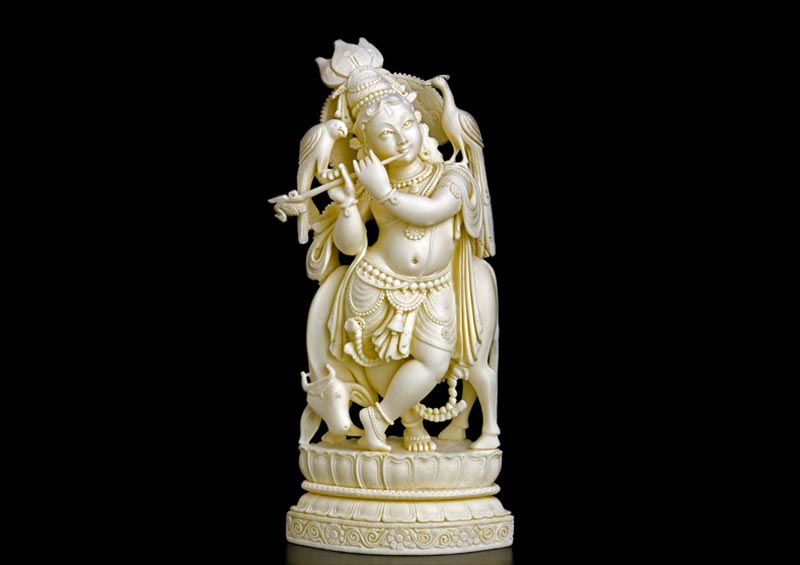
Indian Gods’ Statues

Hinduism is one of the oldest religions in history. While Hindus are believed to have 330 million gods, all devotees believe that there is only one almighty God. This concept may be hard to understand for some. Maybe the following example might be of assistance to shed some light on this idea. Think of a tree that is huge and wide spread. Now if the tree was the ultimate God, the almighty, then its many branches can be said to be the millions of gods worshipped by Hindus. And the leaves can be thought of as the different Avatars or manifestations of the various gods and goddesses. In view of the fact that there are so many gods and goddesses, and that Hindus believe in idol worship, you can come across a wide variety of Indian gods’ statues for sale at online stores.

Some of the most popularly celebrated deities in Hinduism are Lord Ganesha, Lord Shiva, Goddess Durga, Lord Hanuman, Lord Rama, Lord Krishna, Lord Vishnu, Goddess Saraswati, Goddess Lakshami and Lord Shani. Every god is worshipped and praised for his characteristics and legendary life incidences. If we talk about Lord Ram; his characteristics which stood him apart were morality and virtue. These traits made him an ideal son and king of his time. While many have heard of the epic, Ramayana, only a few have read the Sanskrit book that may be considered to be the life story and principal scripture about Lord Rama. Ramayana was written by saint Valmiki and is considered as one of the important epics in the religion.

Lord Rama is also known as Shri Ram, Ramachandra and Maryada Purushottama and believed to be the seventh avatar of Lord Vishnu. This king of Ayodhya’s names has specific meanings that are metaphoric representations of his many characteristics. Ramachandra literally means Rama like the full moon in all its glory. On the other hand Maryada Purushottama translates into being the epitome of righteousness. Lord Rama is also recognized in Jainism as one of the nine, white Balas. Commonly chanted mantras of Rama are ‘Ram Naam Satya Hai’ and ‘Shri Ram Jai Ram Jai Jai Ram’. The mantra, ‘Ram Naam Satya Hai’ is chanted by Hindus from all over the world while carrying a dead body to be cremated. This is done so to imply that the body which can no longer say the lord’s name is of no value to the living world and hence is to be reduced to ashes.

There are many short stories about Lord Rama that aspire the devotees to live righteously and on the path of truth at all times. You can find Lord Rama or other Indian gods statues in most Hindu homes. And while you may belong to another religion, it may be interesting to realize how all the religious teaching and implications point towards that one Almighty God.

Wednesday, 16 November 2011

Hinduism Statues

Hinduism statues are three dimensional sculptures of Hindu gods and goddesses. In view of the fact that symbolism is a great part of this religion, you may notice that deities are represented carrying weapons, atop various animals or birds, holding particular flowers, having multiple hands or heads, etc. While many of you may not know the significance of such aspects in the sculpted figure, all such facets stand for various attributes the god or goddess embodies. For instance, the lotus flower is considered to be the symbol of auspiciousness, beauty and truth. Therefore, Hindu deities who carry or are presented seated on a lotus are said to possess such qualities in their mythological being or personality, such as Goddess Saraswati, Goddess Laxmi, Lord Bramha, Lord Vishnu, etc.

The Hindu religion is believed to have 33,00,00,000 deities, and this may be the reason why it is quite confusing for people from all over the world to identify one from another, without the use of symbols that represent them. Non-Hindus as well as foreigners may be able to recognize lord Ganesh because no other god in Hinduism has an elephant’s head or a mouse as his mode of transportation. They may call him by many names like Ganpati, Gajanana or even the Elephant God, but they refer to the same deity.

If you are looking to buy a deity statue for your home, it may be wise to look for the perfect piece online. You may come across quite a few dealers and manufacturers that sell such sculptures in a variety of sizes; but before doing all that you need to be sure of what god or goddess you are procuring. While most companies are reliable, it is advisable to have a basic knowledge of the god or goddess and their prominent symbols to make your hunt worthwhile. After spending a considering amount of money and time you want the statue to be perfect and have all the attributes of that deity.

Lord Shiva can be identified as a male figure carrying a trident. On the other hand, Lord Vishnu is bound to be carrying a discus, while his incarnation Lord Krishna can be recognized by the lovely peacock feather in his crown. Just like the weapons or embellishments can help you identify the deities, so can their means of transportation, namely the different birds and animals. For example, the bull is lord Shiva’s companion in travel, while Vishnu rests on a great big serpent but travels on a giant eagle. Even the various creatures used as vehicles (vahanas) by the gods are symbolic.

Hinduism Statues are full of mystery and allure, not to mention great beauty. So, start your search for the ideal statue only after you truly know which deity you want to welcome into your home.

Wednesday, 5 October 2011

Religious Statues and Sculptures

To look for exclusive and beautiful religious statues and sculptures for decorative or spiritual purposes can be challenging. You may find such statues made in precious metals like gold and silver at Indian jewelry stores, but coming across some in materials other than metals, such as fiber reinforced plastic (FRP), resin, wood or stone is slightly more difficult. In situations such as these, resources like the Internet come handy. You can hit upon a number of websites that are dedicated to showcasing different types of statues and sculptures made by the owner company, by simply searching for your requirement on any web search engine. Different companies sell different products, therefore it is best to know exactly what you are looking for and if not, have plenty of time to browse around and shortlist items you like.

Indian mythology showcases the various deities in a wide range of moods, names and expressions, hence statues made to capture their essence can be found in a variety of styles and designs. There are many options when it comes to religious statues and sculpture, but some of the most popular are intricately designed statues of Lord Krishna, Lord Ganesha, Goddess Laxmi, Goddess Saraswati, Saibaba, Jalaram, Ram – Sita, Shakuntala, Parshvanath, and Shreenathji. The statues come in various sizes, not to mention the differences in postures and expressions in different statues.

For instance, Lord Ganesha may be in a standing posture, sitting on his royal throne, or lying down. On the other hand goddess Saraswati is always sitting, but the statue may be elaborately carved or simply made to show her elegantly sitting on a lotus with a sitar in her hand. Another example could be of Lord Krishna, who is an expression or Avatar of one of the greater gods, Vishnu. In India you may notice that Krishna is also known as Kishan Bhagwan, Murlidhar, Shreenathji, Vasudeva, Gopala, Jagannatha, and Vithoba. You may find many different statues of Krishna in the market, which capture poses from his countless legendary stories. Gopala or Bal Krishna are statues of Krishna as a child, while Shreenathji is a Rajasthani interpretation of the God with him wearing a traditional Rajasthani outfit. On the other hand, other statues of Krishna may have him playing the flute leaning on a cow, standing alone playing the flute or with Radha next to him.

The variety of religious statues and sculptures you may chance upon in the market is amazing. You can always count on finding the perfect statue of your deity or saint, if you take a little time and browse through a few websites. All you have to do is have a material in mind, and know a range in size that you prefer.

Tuesday, 20 September 2011

Indian Gods Statues

Sri Ramakrishna Paramahansa, one of the principal teachers of Swami Vivekananda once said, “Many are the names of God and infinite the forms through which He may be approached.” In Hinduism one of the most dominant forms of praise and worship is idolism. Indian gods’ statues can be found in most homes, offices, even cars. Indians living in a number of different countries have embraced this approach to in a way preserve their belief and faith in the higher power. With oriental religions like Hinduism, Taoism and Buddhism gaining popularity throughout the world, various statues of gods and goddesses are not only being procured for worship, but also as a means to add a special touch to the décor.

There are a wide variety of sculptures available in the market today. If you are not a resident of India, you may want to search for dealers and statue makers listed on the Internet for your procurement needs. With a large number of online dealers that are committed to supplying products that are made using top grade materials and are high in quality, buying such religious statues online is a great idea. Not only does this save you time and effort of looking for a shop or company in close proximity to your city, but it also gives you the flexibility to take your time in making the right choices in terms of what you want, and provides ample convenience as most items are delivered to your doorstep if need be.

All you have to do is choose the figure you most desire. You can choose from a variety of different statues of Lord Shiva, Lord Ganesha, Lord Krishna, Goddess Parvati, Goddess Saraswati, Goddess Lakshmi, etc. You can also find statues of Shreenathji, Jain saint Parshvanath, Shakuntala, Saibaba, Ram Sita, Ram Darbar, Jalaram, and the like. Most of these statues come in small or medium sizes and in a wide range of materials like brass, fiberglass, silver, wood, ceramic, glass, etc. These statues are durable in addition to being finely carved and amazingly beautiful. Since Indian artisans are known for their delicate and intricate carvings, for the most part this beauty is what you will be paying for. The minute details on the many statues are what bring the mere piece to life.

So, the next time you are out shopping for Indian gods’ statues keep a few things in mind. Remember that you are paying the premium for its beauty not material used, so look for a detailed piece that exudes exquisiteness. Also, buy a statue with its purpose in mind. If you are going to use it as a decorative piece, the size and style should go with your home’s décor. Lastly, acquire the statue from a reputed source as this ensures a good quality product.

Wednesday, 14 September 2011

Statues of Ganesh

The God of wisdom, attainment and prosperity, Ganpati or Ganesha is in all probability one of the most loved and worshipped deities in Hinduism. In fact, there is a ten-day festival celebrated in India, Nepal, and by Hindus living in the United States, Canada, Fiji, Singapore, etc., starting on Ganesh Chaturthi and ending on Anant Chaturdashi. This festival marks the birth of Lord Ganesh as one of the superior gods. The beloved elephant-headed God is believed to bestow his presence on all who worship him during these ten days of celebrations. The festival begins with setting up of statues of Ganesha at homes and podiums especially built and exquisitely decorated for the festival.

On the last day of the festival, Anant Chaturdashi these statues are immersed in water. Traditionally the statues were made out of mud, but through the years they transitioned into materials like Plaster of Paris, which is not environmentally friendly. People have now become aware of the environmental danger and damage this enormous amount of Plaster of Paris does to the rivers, lakes and hence the eco-system, and started considering alternatives like using a permanent idol made out of stone, fiberglass, fiber reinforced plastic (FRP), or metals.

There are a number of options available in the market nowadays. You can find the simplest idols if that is how you interpret the power of Lord Ganesh or the most intricately carved figure that holds every minute detail about the idol right from having his Modak (sweet offerings) and mouse by his feet, to his Parashu (axe), Pasha (lasso) and Ankusha (hook) in his hands. These idols come in a variety of sizes, styles and details that you can choose from, according to your preferences and purpose of acquiring the statue. While many might see the statues as an idol for worship, there are a large number of people who like buying statues of this deity for decorative purposes, as a gift for special occasions, and some even collect different Ganesh statues as almost each is distinct and unique in its own way.

Statues of Ganesha may be portrayed dancing or standing, but most popularly sitting on a throne with a protruding belly, his weapons in hand, mouse and sweets called modaka or laddus by his side. The sheer skill of the artisans and their craftsmanship can be witnessed through some of the more intricately worked on elaborate idols of this deity. Owning such piece of art, a statue of Ganesha, regardless of its size or purpose is something you can take pride in for years to come.

Friday, 2 September 2011

Statues of Parshvanath Bhagavan

An ancient religion from the Indian sub-continent, Jainism shows the way to supreme bliss and liberation through ways of harmlessness and renunciation. There was a time when it was believed that most of the Jain population dwelled in India, but today followers of this beautiful religion are situated all over the world. As two of the prominent figures in Jainism are Bhagavan Mahavira and Bhagavan Parshvanath, small and big statues of these Gods are a part of a majority of Jain households.

While the profound religion has not been founded by a single great soul, prophets called tirthankaras or ford-makers have revealed the different facets of Jainism and shown the way for achieving supreme spirituality and liberation to the followers. In what jains call the present age, there have been twenty-four tirthankaras namely Adinatha (Rushabhnath), Ajitnatha, Sambhavanatha, Abhinandana Swami, Sumatinatha, Padmaprabhu, Suparshvanath, Chandraprabhu, Suvidhinath (Pushpadanta), Shitalnatha, Shreyansanatha, Vasupujya Swami, Vimalanatha, Anantanatha, Dharmanatha, Shantinatha, Kunthunatha, Aranatha, Mallinatha, Muni Suvrata Swami, Naminatha, Neminatha, Parshvanatha, and Mahavira (Vardhamana).

Bhagavan Mahavira and Bhagavan Parshvanatha are the two most loved tirthankaras. While stories and teachings of Mahavira are popular and carry all five principles of Jainism, namely no lying (satya), no stealing (asteya), no possessions (aparigraha), no violence (ahimsa), and chastity (brahmacharya), the 23rd tirthankara, Parshvanatha is closely associated with amnesty and compassion and preached the first four principles excluding chastity. Statues of Mahavira and Parshvanatha represent the three jewels of Jainism; Right Faith – Samyak Darshana, Right Knowledge – Samyak Jnana, and Right conduct – Samyak Charitra.
The two main festivals for Jains are Paryushana and Diwali. While Diwali is a festival celebrated by Hindus as well, Paryushana or Dasa Laksana, also known as Parvadhiraj is typical of Jainism and is believed of having the power of showing the path of salvation. During the eight days of Paryushana, followers pray, worship, meditate, and fast. With a purpose to purify the soul by looking inward, this festival is widely practiced by followers of Jainism, teachings of Parshvanatha and Mahavira.

Principles like not eating after sunset, not consuming food items like garlic, onions, potatoes, etc. are still followed throughout the year by some staunch jain families.

Idols of the 24 tirthankaras of the Jain religion are identical as they represent the same qualities and virtues. However, there is one unique symbol placed at the bottom or top of each idol to help differentiate between them. Statues of Parshvanatha are distinct, always represented with a hood of a three, seven or eleven headed snake (naga), while lord Mahavir’s idols can be easily recognized by the presence of the symbol of a lion at the bottom. The statues of the 23rd and 24th tirthankaras are not only popular among the Jains, but also among Hindus and art-lovers for what they represent.

Tuesday, 16 August 2011

Carved Statues of Indian Gods and Goddesses

Carved statues of Indian Gods and Goddesses have become a great objet d’art to place in your home in order to decorate it, and give it a feeling of warmth and wellness. Thanks to the spotlight that eastern cultures bask in now, many people around the world, irrespective of their religion recognize the different Gods and Goddesses of India and understand the significance of placing statues of different deities in the residence.

Some of the known Gods in Hindu Mythology are Lord Ganesh, Lord Krishna, Goddess Lakshmi and Goddess Saraswati. Placing statues of these deities are very common in Indian households and you will find one of these Gods or Goddesses in almost every Hindu home. These idols are either placed as art or even prayed to everyday by the worshippers.

With number of options depicting different forms of the almighty, and his expressions, you can choose an idol based on your beliefs and also one that goes well with your home decor. You can choose from a wide variety of statues like Shreenathji, Parshvanath, Ram, Jalaram, Saibaba, and Ganesh with Devi Parvati. All these artifacts are religious by nature but they don’t make your home feel overtly spiritual. Your place of residence is an extension of your personality and if you take pride in your culture and beliefs, this could be a way of showcasing that to the world.

Hindu mythology states that the three supreme Gods. They are, Lord Bhramha – the creator of the universe, Lord Vishnu who is the Protector or the Preserver of the universe, and Lord Shiva who is the Destroyer. Hindus around the world worship different avatars of Gods and Goddesses and this choice depends largely on family beliefs, communities and traditions. Some of the most worshipped Goddesses in Hinduism are Lakshmi – the deity of wealth and prosperity, Saraswati – the Goddess of knowledge, Parvati – the mother of Lord Ganesh, Durga – an aggressive avatar of Goddess Durga, and Kali who is considered the eternal energy Goddess.

Hinduism is a complex and multifaceted religion, and all the Indian Gods and Goddesses are respected and prayed to with enormous zeal and enthusiasm, thus for Hindus such idols mean more than just artifacts to decorate the home. But, with people across the world becoming more aware of other religions and cultures, these carved statues can now be spotted at the trendiest restaurants, lounges, buildings and art lovers’ houses, thanks to their beautifully intricate work.